
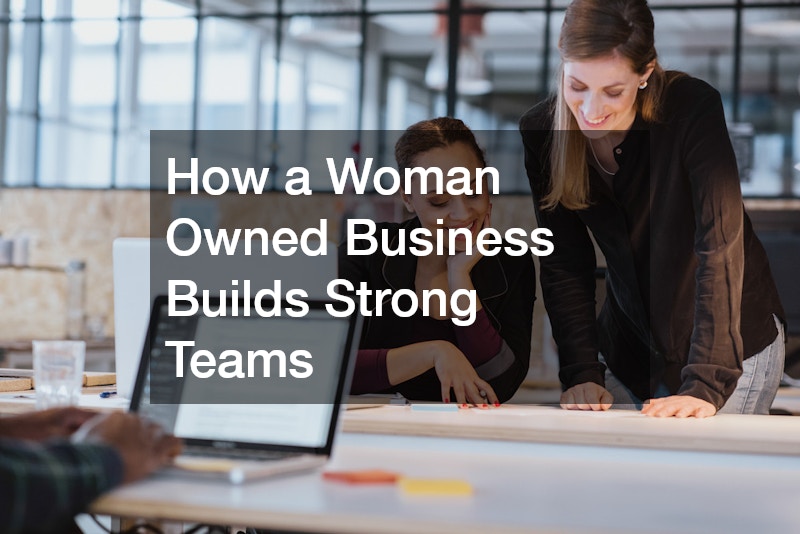
In today’s dynamic business landscape, woman owned businesses (WBEs) are making significant strides, not only in driving economic growth but also in setting examples of effective team building. The unique approaches deployed by these businesses often focus on inclusivity, empowerment, and sustainable development. With increased attention on diversity and inclusion in the corporate world, WBEs stand out for their innovative strategies in nurturing robust and collaborative teams.
By exploring the practices and principles that guide these businesses, we gain valuable insights into effective team building and management.
What Strategies Do Woman Owned Businesses Use to Foster Team Collaboration?
Woman owned businesses employ a variety of strategies to foster collaboration, rooted in principles of trust, open communication, and empowerment. Central to this approach is the creation of an environment where all team members feel valued and heard. Regular team meetings and open forums are common strategies implemented by WBEs to encourage the free flow of ideas and promote a culture of inclusion. By facilitating avenues for feedback and dialogue, these enterprises ensure that collaboration is not just an ideal, but a practiced and lived reality.
Additionally, many WBEs invest in team-building activities that are specifically designed to strengthen interpersonal relationships among team members. These activities can range from workshops and retreats to more informal gatherings aimed at fostering camaraderie. The objective is to break down traditional hierarchical barriers and encourage a more egalitarian approach to teamwork. Through these means, WBEs often see improvements in both team cohesion and overall productivity.
How Do Woman Owned Businesses Address Diversity and Inclusion in Their Teams?
Diversity and inclusion are cornerstones of the team-building efforts at woman owned businesses. By prioritizing these values, WBEs cultivate teams that bring varied perspectives and ideas to the table, which in turn drives innovation and creativity. Recruitment practices at these businesses typically reflect a commitment to diversity, targeting candidates from a broad spectrum of backgrounds and experiences. This inclusive approach not only enriches the workplace culture but also aligns with the wider goals of social responsibility and equity.
Once diversity is achieved, the challenge shifts to maintaining an inclusive environment where all employees feel supported and empowered to contribute. To this end, many WBEs implement comprehensive training programs that focus on cultural competency and unconscious bias. These initiatives raise awareness and equip team members with the skills needed to navigate and appreciate diversity, fostering an inclusive climate that benefits everyone.
What Role Does Leadership Play in the Success of a Woman Owned Business?
The success of a woman owned business is intricately linked to its leadership style. Leaders in WBEs often embrace a transformational, empathetic approach that seeks to inspire and motivate their teams. This style of leadership contrasts with traditional authoritative models and focuses instead on empowerment, trust, and collaboration. Such leaders are seen as mentors and advocates, fostering an environment where team members are encouraged to take initiative and innovate.
Decision-making processes in woman owned businesses are often characterized by inclusivity and transparency. Leaders actively encourage input from all team members and value diverse viewpoints when making decisions. This participative leadership style not only boosts morale but also enhances the sense of ownership and accountability within teams. By cultivating a shared vision, leaders in WBEs drive collective effort and commitment towards common goals.
How Do Woman Owned Businesses Measure Team Success and Performance?
Measuring team success and performance in woman owned businesses involves a combination of quantitative metrics and qualitative evaluations. Key performance indicators (KPIs) are often employed to assess outputs such as productivity, efficiency, and achievement of goals. However, WBEs also place significant emphasis on qualitative measures, such as team engagement, satisfaction, and cohesion.
Regular performance reviews and feedback sessions provide essential insights into team dynamics and individual contributions. These evaluations are typically inclusive, involving self-assessment and peer reviews. By fostering a culture of continuous feedback, WBEs ensure that team members are not only accountable but also supported in their professional growth and development.
What Challenges Do Woman Owned Businesses Face in Building Strong Teams?
Despite the numerous benefits of their unique approach, woman owned businesses often face specific challenges in building strong teams. One noteworthy challenge is overcoming entrenched stereotypes and biases. Navigating these societal norms requires conscious effort and strategic interventions, such as targeted diversity and inclusion initiatives. By actively countering stereotypes, WBEs aim to create a fair and equitable environment for all team members.
Woman owned businesses are pioneering innovative strategies in team building, characterized by inclusivity, collaboration, and empowerment. By adopting unique leadership styles and prioritizing diversity and inclusion, these businesses have successfully cultivated strong teams that drive their economic success and contribute to societal progress. Despite facing distinct challenges, such as resource constraints and cultural biases, WBEs have shown remarkable resilience and adaptability. As they continue to grow and expand, these enterprises not only enhance their competitive edge but also set a benchmark for others in the business community. The journey of woman owned businesses serves as an inspiring testament to the power of inclusive and effective team building.