Choosing the right equipment is an essential part of planning any construction project. Cranes must safely handle specific load weights, reach required heights, and operate effectively within the available space. Because job sites vary widely, contractors need equipment that matches the technical demands of each project rather than a one-size-fits-all solution. A professional crane provider evaluates these factors before recommending machinery and support services. By considering the project’s scope, site conditions, and lifting requirements, construction teams can use equipment that supports efficient progress while helping reduce unnecessary complications.
Evaluating the Job’s Lifting Requirements
Before selecting equipment, the provider needs to understand exactly what the project requires. This process often begins with reviewing the materials that must be lifted, their individual and combined weights, and how frequently lifting operations will occur. Steel beams, precast concrete components, roofing materials, mechanical equipment, and other construction materials each create different lifting demands. The equipment must have adequate capacity for the planned load while accounting for the specific conditions under which the lift will take place.
Lift height and operating radius are equally important. A crane may have enough capacity to lift a particular load at a short distance but have reduced capacity as the load moves farther from the machine. The distance between the crane’s center of rotation and the load, along with the required boom length and lifting height, directly affects equipment selection. A careful review of load charts helps determine whether a specific machine can safely complete the planned work at the necessary radius.
The type of lift also influences the recommendation. Some jobs involve routine material handling throughout the day, while others require a small number of highly controlled lifts involving unusually heavy or oversized components. A crane company considers whether the project requires precise placement, extended reach, repeated lifts, or specialized rigging. This information helps identify equipment with the appropriate configuration and operational capabilities.
Matching Equipment to Site Conditions
Even when two projects require similar lifting capacities, differences in the job site can lead to very different equipment recommendations. Available space is one of the first considerations. A congested urban project may have limited room for setup and maneuvering, while an open commercial site may accommodate larger equipment and wider operating areas. Access roads, nearby structures, overhead obstacles, and the location of materials all influence how equipment can enter and function on the property.
A crane company also considers environmental and logistical conditions that could influence operations. Nearby traffic, adjacent businesses, power lines, restricted work hours, and limited staging areas can all complicate lifting activities. Reviewing these conditions in advance allows the construction team to develop a practical approach to equipment placement and movement. Proper planning can help prevent delays caused by discovering site restrictions after the machinery arrives.
Planning for Safe and Efficient Operation
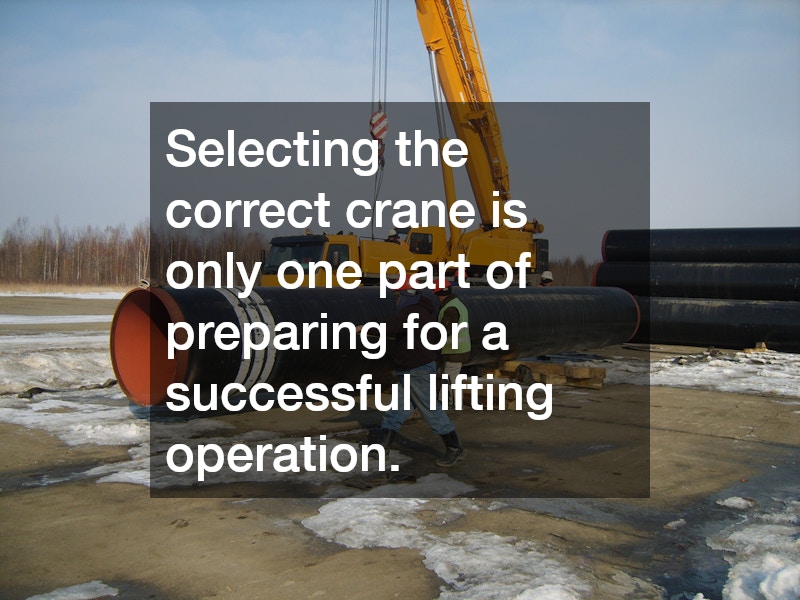
Selecting the correct crane is only one part of preparing for a successful lifting operation. The equipment must also be paired with appropriate rigging, qualified personnel, and a clear understanding of the planned work. Load characteristics can determine which slings, shackles, spreader bars, or other rigging components are appropriate. The center of gravity, attachment points, shape, and stability of the load must all be considered before it is lifted.
Communication between the construction team and equipment provider is important throughout this process. Project managers can provide drawings, material specifications, schedules, and site information that help clarify the job’s requirements. In return, the provider can identify equipment needs and potential operational concerns before work begins. This early coordination gives everyone involved a clearer understanding of what the lifting operation will require.
Ultimately, the goal is to provide lifting support that fits the job from both a technical and practical standpoint. Proper equipment selection considers capacity, reach, ground support, access, load characteristics, and the sequence of construction activities. When these details are evaluated together, contractors can better coordinate lifting operations with the broader project schedule and maintain a more organized workflow across the job site.
The right crane can make a significant difference in how efficiently a construction project moves from one phase to the next. Rather than choosing equipment based solely on maximum capacity, contractors benefit from examining the complete set of project conditions that affect each lift. A knowledgeable crane company can use this information to recommend machinery and support that align with the actual demands of the work.